
November 17, 2026
Read More
Take Action to Support Trans Rights
Join us in demanding that Congress act — because every person deserves to live with safety, dignity, and equal protection under the law.
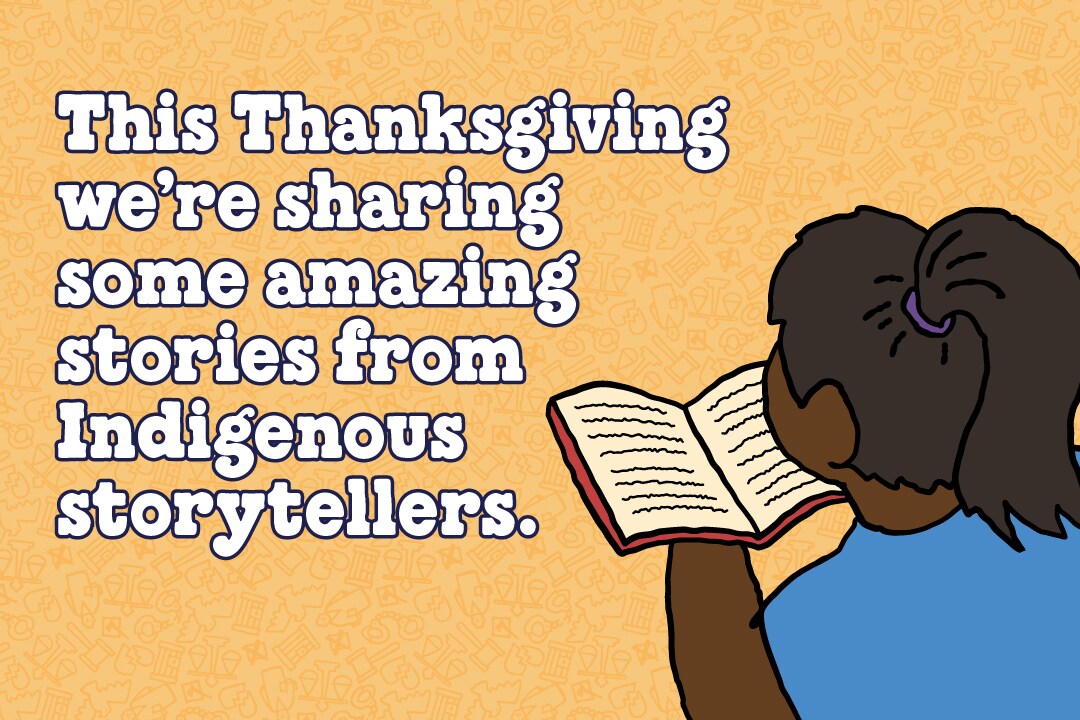
Thanksgiving at its best is a time of gathering with friends and family and celebrating the bonds that connect us.
The first harvest feast at Plymouth, MA, in 1621, brought together roughly 50 colonists and 90 Wampanoag men for three days. The Wampanoag had helped the newcomers survive by teaching them how to grow food, but the only firsthand accounts we have of that feast were written by colonists. What came after, including the violence against and forced removals of Indigenous peoples across Turtle Island carried out as US federal policy, is an important part of the story that has been intentionally hidden from many people. This year, in the spirit of learning, solidarity, and reflection, we’re sharing work from Indigenous creators and storytellers, in their own words.
Wondering what to read, watch, or listen to as you celebrate with friends and family? Start here!
Villanueva analyzes the destructive colonial dynamics at work in the worlds of philanthropy and finance and offers an Indigenous-led path forward to repair and healing. Learn more.
Nagle traces her people’s generations-long struggle for tribal lands and sovereignty, from the forced removal of the Muscogee to Oklahoma in the 1830s to the recent Supreme Court ruling and beyond. Learn more.
12-year-old Wesley has high hopes for Indigenous People’s Day. Nothing goes according to plan, which ultimately helps her figure out her place in her school, her family, and her community. Learn more.
Through beautiful illustrations and storytelling, we experience how young Miya learns about the history of residential schools. Learn more.
A groundbreaking talk show focused on empowering truth, reclaiming democracy, and living in balance with Mother Earth. It invites viewers to consider their answer to one of the most common Haudenosaunee greetings, “Are you at peace?” Learn more.
A young Cayuga woman named Jax searches for her missing sister and tries to protect her 13-year-old niece in a drama that also serves up a takedown of America’s colonialist legacy. Learn more.
Four Indigenous teens in rural Oklahoma steal, scheme, and save up for an escape to the dreamland of California. It’s the first American series to feature all-Indigenous writers and directors. Learn more.
When evidence of unmarked graves is found at a former residential school in British Columbia, it sparks a national outcry against a system created to destroy Indigenous culture and communities. Learn more.
A documentary-style true-crime investigation of the compounding intergenerational pain of Indian boarding schools and the community’s search for truth, healing, and reconciliation. Learn more.
Nagle (Cherokee Nation) goes back to the nation’s founding and puts Native nations at the center of the story. Learn more.
Deerchild (Cree) creates a “radio space for Indigenous voices,” inviting community members, artists, and leaders into a conversation about Indigenous Canada. Learn more.
Wilbur (Swinomish and Tulalip) and Lane (Lummi Nation) explore Native relationships to land, to other living beings, and to one another. Learn more.
Subscribe Now And We'll Make Sure You Get The Inside Scoop On Ben & Jerry's Fun And Flavors! It's Like Dessert For Your Inbox, And You're Going To Want Seconds.
Join us in demanding that Congress act — because every person deserves to live with safety, dignity, and equal protection under the law.
Sadly, all sundaes must come to an end, even the funky-chunkiest. Which iconic Ben & Jerry’s flavors have been sent to the Flavor Graveyard? Take the quiz to test your knowledge!
Pumpkins? Costumes? Haunted houses? What’s on your scary season bucket list this year? (Spoiler: Ours is heavy on the ice cream treats.)


